
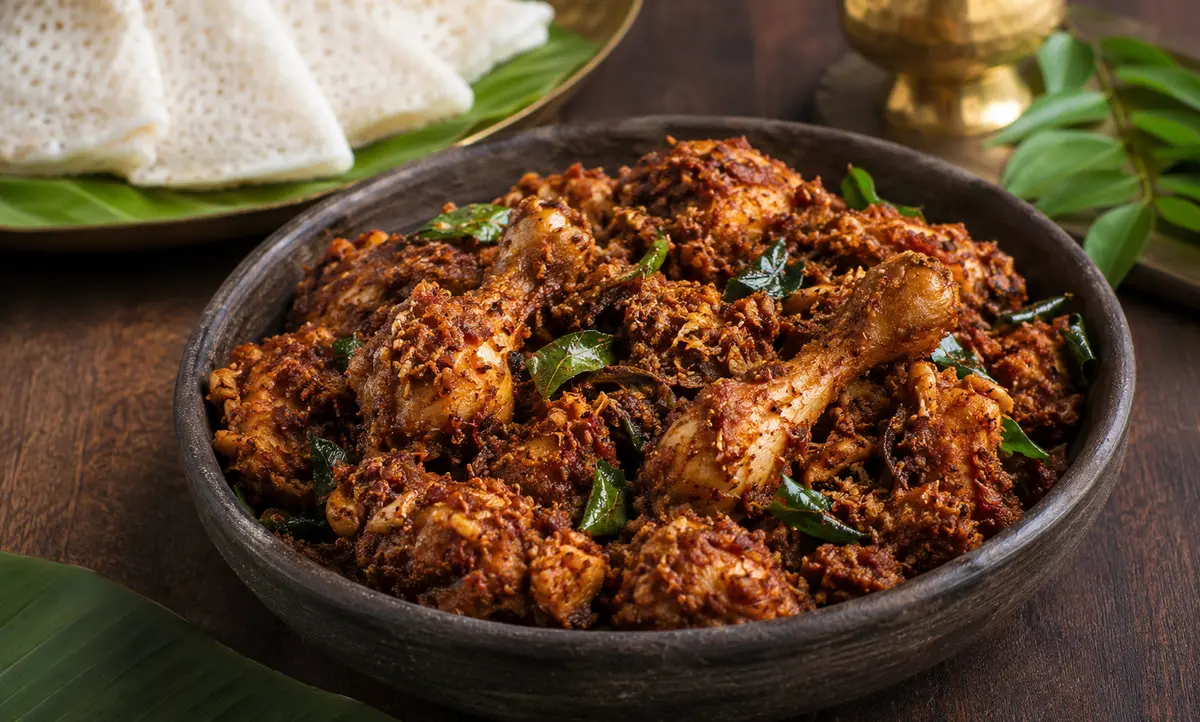
Mangalore style spicy chicken sukka is a deeply aromatic coastal Karnataka dish in which tender chicken is coated with a dry masala made from roasted spices and fresh coconut. Known locally as Kori Sukka or Kori Ajadina, it delivers heat, gentle tang and the nutty flavour of toasted coconut in every bite.
The secret is not a ready-made spice powder or a large quantity of oil. An authentic result comes from slowly roasting whole spices, grinding them with tamarind, cooking the chicken in its natural juices and adding coconut near the end. The finished dish should look moist and glossy but should not have flowing gravy.
This easy home recipe serves four people and takes about one hour, including preparation. You can control the heat without losing the traditional red colour by using mostly Byadgi chillies and adding one or two hotter dried chillies only if your family enjoys very spicy food.
What Is Mangalore Style Spicy Chicken Sukka?
Chicken sukka is a popular Mangalorean preparation from the coastal belt of Karnataka. The Tulu word kori means chicken, while the dish is often called kori ajadina in local homes. Unlike a curry, the ground masala and coconut are cooked down until they cling closely to the meat.
The flavour is layered rather than simply hot. Coriander provides body, cumin and fennel add warmth, pepper contributes a sharper heat, and a small amount of fenugreek gives depth. Tamarind brings mild sourness, while curry leaves and coconut oil create the familiar coastal aroma.
Explore more regional food and practical home guides in the Nera News Lifestyle section.
Mangalore Chicken Sukka Recipe Details
- Preparation time: 20 minutes
- Cooking time: 40 minutes
- Total time: 1 hour
- Servings: 4
- Cuisine: Mangalorean and coastal Karnataka
- Course: Main course or side dish
- Difficulty: Easy to moderate
Ingredients for Mangalore Style Spicy Chicken Sukka
Chicken and Marinade
- 750 grams bone-in chicken, cut into medium pieces
- Half teaspoon turmeric powder
- One teaspoon salt, or according to taste
- One tablespoon lemon juice
Fresh Roasted Sukka Masala
- Eight dried Byadgi chillies
- Two hot dried red chillies, optional
- Two tablespoons coriander seeds
- One teaspoon cumin seeds
- Half teaspoon black peppercorns
- Quarter teaspoon fenugreek seeds
- Half teaspoon fennel seeds
- Four cloves
- One small cinnamon stick
- One teaspoon seedless tamarind
- Six garlic cloves
- One inch ginger
Onion and Coconut Finish
- Two medium onions, finely sliced
- Two cups fresh grated coconut
- Two sprigs curry leaves
- Two tablespoons coconut oil
- A small quantity of water for grinding
How to Make Mangalore Style Spicy Chicken Sukka
Step 1: Marinate the Chicken
Place the cleaned chicken in a bowl. Add turmeric, salt and lemon juice, mix thoroughly and leave it for 20 minutes. Bone-in chicken is the traditional choice because it stays juicy and gives the masala a fuller flavour. Keep the pieces medium-sized so they cook evenly.
Step 2: Roast the Whole Spices
Heat a heavy pan on a low flame. Add the Byadgi chillies and optional hot chillies first. Roast briefly until crisp, taking care not to burn them. Remove them, then roast the coriander seeds, cumin, pepper, fenugreek, fennel, cloves and cinnamon.
Keep stirring and remove the spices as soon as they smell aromatic. High heat can make fenugreek and chillies bitter, so patience at this stage directly improves the finished chicken sukka.
Step 3: Grind the Sukka Masala
Allow the roasted spices to cool. Grind them with tamarind, ginger, garlic and just enough water to form a smooth, thick paste. Avoid adding too much water. A loose paste takes longer to reduce and can make the chicken taste boiled rather than roasted.
Step 4: Cook the Onion and Chicken
Heat coconut oil in a wide kadai or thick-bottomed pan. Add curry leaves, followed by the sliced onions. Cook over medium heat until the onions become soft and golden. Add the marinated chicken and stir for three to four minutes so every piece picks up the onion and curry leaf flavour.
Cover the pan and cook over medium-low heat for about 12 to 15 minutes. Chicken normally releases enough moisture to begin cooking without added water. Check occasionally and stir from the bottom. If the pan becomes completely dry before the meat is tender, add only a few tablespoons of hot water.
Step 5: Add the Ground Mangalore Masala
Add the freshly ground masala paste and mix until it coats all the chicken pieces. Cover and continue cooking until the chicken is tender and the raw smell of the masala has disappeared. Stir every few minutes to prevent the spice paste from catching at the base.
Step 6: Toast and Add Fresh Coconut
In a separate dry pan, toast the grated coconut over low heat until it becomes lightly golden and smells nutty. Do not make it dark brown. Add the toasted coconut to the cooked chicken and combine it thoroughly with the masala.
Step 7: Create the Traditional Dry Finish
Cook uncovered over a low flame for another five to eight minutes. Stir gently until excess moisture evaporates and the coconut masala clings to the chicken. Taste and adjust salt. Switch off the heat and rest the dish for ten minutes before serving so the flavours settle.
Tips for Authentic Mangalore Chicken Sukka
- Use fresh grated coconut for the best texture, aroma and gentle sweetness.
- Choose bone-in chicken with a little natural fat so the meat remains juicy.
- Use Byadgi chillies for colour and add hotter chillies separately to control heat.
- Roast spices on low heat and remove each batch before it becomes dark.
- Use very little water because chicken sukka must finish dry or semi-dry.
- A wide pan helps moisture evaporate and gives every piece an even masala coating.
- Do not rush the final stage. Slow cooking develops the roasted coconut flavour.
What to Serve With Spicy Chicken Sukka
In Mangalore, chicken sukka is often served with soft neer dosa, rice rotti, boiled rice or red rice. Neer dosa works especially well because its delicate texture balances the robust coconut masala. The dish also pairs comfortably with chapati, plain rice or ghee rice.
For a complete coastal meal, serve a mild vegetable side and sliced cucumber beside the chicken. Keep the accompaniments simple because the sukka already has several layers of spice. Readers interested in more regional stories can visit the Kannada section and browse the Nera News archive.
Common Chicken Sukka Mistakes to Avoid
Burning the spices is the quickest way to create a bitter dish. Roast on low heat and keep everything moving. Another common mistake is pouring in too much water. The chicken and onion release moisture, and extra water dilutes the roasted flavour.
Adding raw coconut too early can also change the texture. Lightly toast it and mix it in when the chicken is almost cooked. Finally, do not replace every whole spice with generic curry powder. Freshly roasted masala is what gives Mangalore style spicy chicken sukka its distinct character.
How to Store and Reheat Chicken Sukka
Cool leftovers promptly and store them in a clean, airtight container in the refrigerator for up to two days. Reheat only the portion you plan to eat. Use a covered pan over low heat with one tablespoon of water, then uncover briefly to restore the dry texture.
Fresh coconut makes this dish more perishable than a dry spice mix, so do not leave it at room temperature for long periods. If the chicken develops an unusual smell or texture, discard it.
Mangalore Style Spicy Chicken Sukka FAQs
Is Mangalore chicken sukka very spicy?
It can be spicy, but you can control the heat. Byadgi chillies give a rich red colour with moderate heat. Leave out the hotter dried chillies for a milder family version while retaining the traditional flavour.
Can I use boneless chicken for chicken sukka?
Yes, boneless thigh pieces work better than breast because they remain moist. Reduce the cooking time and check early to prevent the meat from becoming dry. Bone-in chicken still gives the most authentic taste.
What is the difference between chicken sukka and chicken ghee roast?
Chicken sukka prominently uses grated coconut and normally finishes with a textured, dry coating. Chicken ghee roast relies more heavily on ghee and a smooth red chilli masala. Both are coastal favourites, but their fat, texture and spice balance differ.
Can desiccated coconut replace fresh coconut?
It can be used when fresh coconut is unavailable, but the result will be drier and less aromatic. Sprinkle a little warm water over unsweetened desiccated coconut before lightly roasting it. Avoid sweetened packaged coconut.
Why is my chicken sukka watery?
The chicken may have released more moisture, or too much water may have been used while grinding. Cook uncovered in a wide pan over low to medium heat, stirring regularly, until the masala becomes thick and coats the meat.
How long can homemade chicken sukka be stored?
When cooled quickly and refrigerated in an airtight container, it is best eaten within two days. Reheat it thoroughly once and avoid repeatedly warming and cooling the same batch.
Serve Mangalore Chicken Sukka Fresh
The best Mangalore style spicy chicken sukka has tender meat, a fragrant roasted coconut coating and no watery gravy at the bottom of the pan. Measure the spices, keep the roasting heat low and let the chicken cook in its own juices before adding the coconut.
Serve it warm with neer dosa or rice and adjust only the number of hot chillies, not the core roasted masala. That simple balance keeps the dish approachable while preserving the flavour that makes Kori Sukka a much-loved Mangalorean recipe.