
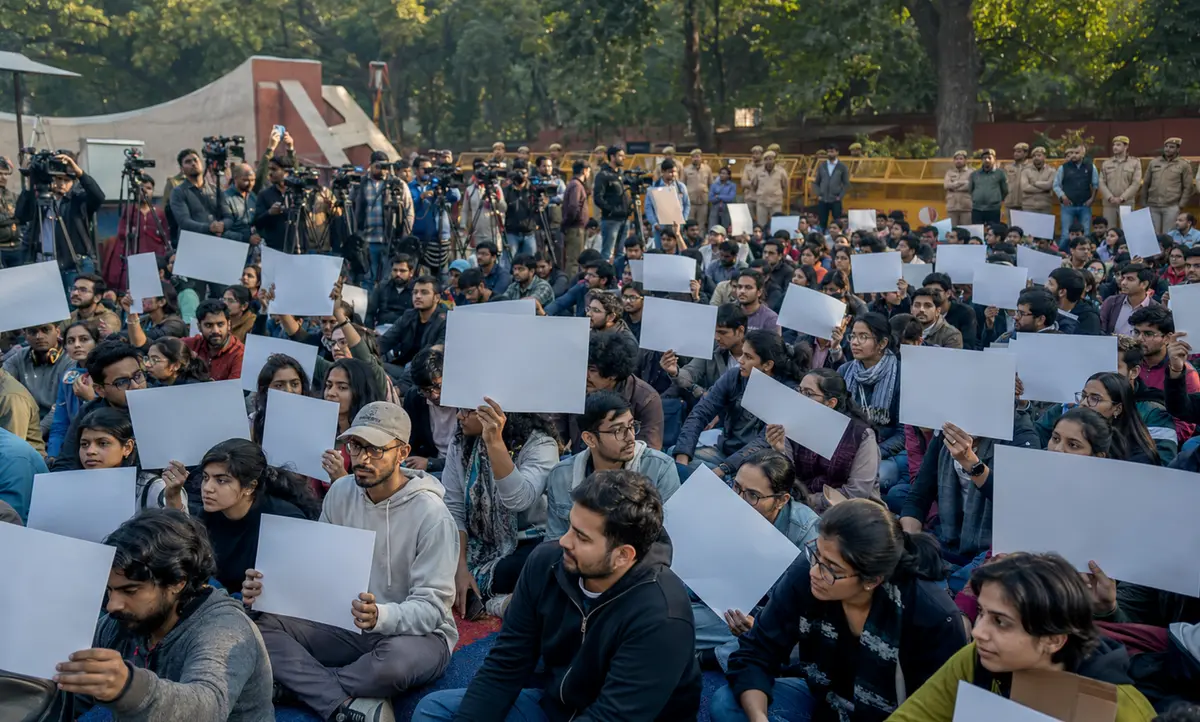
The Cockroach Janta Party has declared that its demand for the resignation of Dharmendra Pradhan is non-negotiable, signalling that the student-led agitation will continue despite fresh talks with the government and Sonam Wangchuk ending his 26-day hunger strike.
CJP founder Abhijeet Dipke welcomed Wangchuk's decision to end the fast and thanked him for supporting the campaign. However, he made it clear that the peaceful demonstration at Jantar Mantar would not be withdrawn until the Union Education Minister steps down over the alleged NEET-UG 2026 paper leak.
Why CJP Says Dharmendra Pradhan Must Resign
CJP leaders argue that the controversy requires political accountability at the highest level of the Education Ministry. They say measures against people who leak examination papers will address only one part of the problem unless responsibility is fixed for the failure of the examination system.
The group has repeatedly claimed that the alleged leak affected the confidence of millions of students preparing for competitive examinations. Its representatives say a resignation would demonstrate that the government accepts responsibility for failures that harmed candidates and their families.
The demand has become the central point of the CJP campaign. Even after the government announced plans for stronger punishment and fast-track courts, protest leaders said their position on Pradhan had not changed.
Readers can follow continuing political developments through the latest India news section.
Sonam Wangchuk Ends 26-Day Hunger Strike
Climate activist and education reformer Sonam Wangchuk ended his hunger strike after 26 days following negotiations with the Centre. Union ministers JP Nadda and Jitendra Singh were present when he broke the fast at Medanta Hospital in Gurugram.
Wangchuk said the decision followed lengthy negotiations and was also taken because of concern about possible violence. He urged supporters to remain vigilant and prevent any attempt to disturb the peaceful nature of the movement.
His health had become a major concern during the protest. Reports said he had lost around 11 kilograms, and political leaders from different parties had appealed to him to end the fast. Wangchuk said 65 Members of Parliament had either visited him or signed letters requesting that he withdraw the hunger strike.
Prime Minister Narendra Modi welcomed the decision and wished Wangchuk a speedy recovery. He asked the activist to follow medical advice and regain his health.
What the Government Assured Sonam Wangchuk
After ending the fast, Wangchuk said he had received written assurances on several issues raised during the agitation. These included a commitment to discuss accountability in the examination system, the alleged NEET-UG paper leak and broader examination reforms in Parliament.
He also said the government was positive about not registering cases against peaceful protesters, including people who participated in the July 20 march towards Parliament. The possibility of compensation for families affected by student suicides linked to the examination controversy was also reportedly under consideration.
These assurances were important enough for Wangchuk to end his fast. However, they did not include the resignation of Dharmendra Pradhan, which remains the CJP's main political demand.
CJP Protest Continues After Wangchuk Ends Fast
CJP said it was relieved that Wangchuk had ended the hunger strike because his life and health were more important than continuing the fast. At the same time, the organisation separated Wangchuk's personal decision from the future of the wider protest.
Hundreds of supporters remained at Jantar Mantar after news of the decision reached the protest site. Volunteers continued distributing food and water, while slogans and speeches carried on. The atmosphere showed that the movement had not ended with Wangchuk's fast.
CJP representatives said the agitation would remain peaceful. They also repeated that the resignation demand could not be exchanged for promises of future discussion or proposed legal reforms.
Government and CJP Begin Talks Over Paper Leak Row
CJP representatives have started discussions with senior government ministers. The talks focus on examination security, accountability, legal protection for peaceful protesters and steps to prevent future leaks.
The start of formal dialogue marks a change from the earlier disagreement over where discussions should take place. CJP had rejected proposals for meetings at a minister's residence or office and asked for Jantar Mantar or a neutral venue.
Dialogue may reduce immediate tension, but it has not resolved the central dispute. The government has not accepted the demand for Pradhan's resignation, while CJP says it will continue nationwide protests until that demand is met.
New Paper Leak Law and Fast-Track Courts
Prime Minister Modi has announced that the government is preparing tougher measures against examination paper leaks. The proposed steps include fast-track courts and stricter punishment for people involved in leaking or selling examination papers.
The government says these measures will protect students and deliver faster justice. CJP leaders have responded that prevention, institutional reform and political responsibility must accompany punishment.
The distinction matters. Fast-track courts deal with cases after an offence occurs. Protesters want changes that secure question papers, improve oversight, detect organised networks and prevent leaks before an examination takes place.
Students looking for verified education and career information can also visit the jobs and education updates page.
Why the Dharmendra Pradhan Demand Remains Central
The resignation demand gives the movement a clear and measurable objective. Without it, the protest could become a broad campaign involving several connected concerns, including paper leaks, unemployment, police action and examination reform.
For the government, accepting a minister's resignation would carry significant political consequences. It could be viewed as an admission of responsibility and may encourage similar demands in other controversies. This explains why the issue remains difficult even as both sides agree to discuss examination reforms.
For CJP, withdrawing the demand could disappoint supporters who joined the movement specifically to seek direct accountability. Its leaders are therefore presenting continued negotiations and continued protest as parallel strategies.
What Happens Next in the CJP Protest?
The next stage will depend on what emerges from discussions between CJP representatives and the government. Protesters will closely watch whether the assurances given to Wangchuk are implemented in writing, debated in Parliament and converted into clear administrative action.
Attention will also remain on the proposed paper leak legislation. Important details include the penalties, investigation process, responsibility of examination agencies and safeguards for students whose academic year may be affected.
CJP has indicated that demonstrations may continue in Delhi and other cities. Organisers have called for peaceful participation and asked supporters to avoid provocation. Authorities are expected to maintain security around Jantar Mantar while talks continue.
Dharmendra Pradhan Resignation FAQs
What is CJP demanding from the government?
CJP is demanding accountability for the alleged NEET-UG 2026 paper leak, reforms to prevent future examination leaks and the resignation of Education Minister Dharmendra Pradhan.
Did Sonam Wangchuk end his hunger strike?
Yes. Wangchuk ended his 26-day hunger strike after receiving assurances from the government and appeals from Members of Parliament. He also cited concern about possible violence.
Has the CJP protest ended?
No. CJP says its peaceful protest at Jantar Mantar will continue until Dharmendra Pradhan resigns. Talks with the government are taking place, but the resignation demand remains unresolved.
What has the government promised on paper leaks?
The government has announced plans for fast-track courts, stricter punishment and new legal measures against examination paper leaks. It has also assured discussion of examination accountability and reforms in Parliament.