
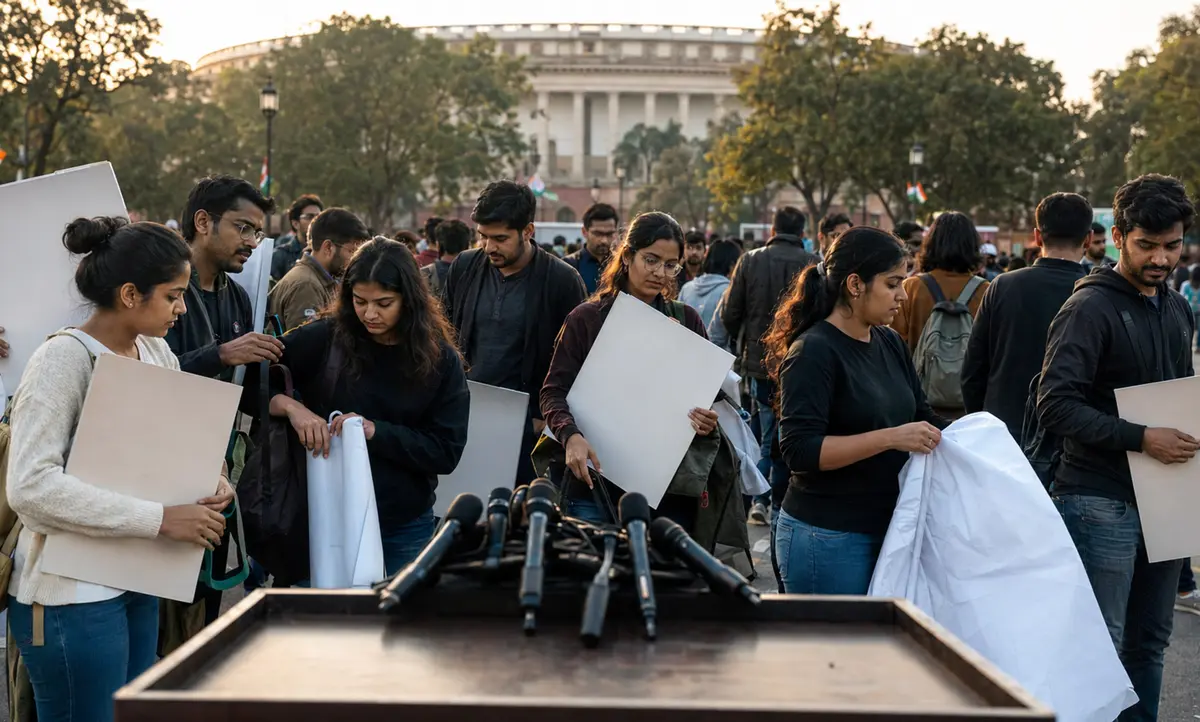
The Cockroach Janta Party has ended its protest at Delhi's Jantar Mantar after three rounds of talks with the central government. CJP said key demands raised during the agitation had been accepted, bringing one of India's most closely watched youth protests to a dramatic close.
The decision followed the resignation of Union Education Minister Dharmendra Pradhan amid the NEET-UG 2026 paper leak controversy. The government had also indicated support for compensation to affected families and relief from legal action for peaceful protesters.
The political question now extends beyond the protest site. CJP emerged as the clearest winner, the government limited further damage through negotiation, and Congress gained visibility by supporting the students. However, claims that Congress tried to hijack the movement remain political allegations rather than an established fact.
The movement ended under the CJP banner, with its leaders negotiating directly with the government and announcing the withdrawal. That outcome suggests the youth-led organisation retained control of its campaign despite strong support from opposition parties.
Why Did CJP End the Jantar Mantar Protest?
CJP announced the withdrawal after a third round of discussions with government representatives. Its central demand had already been met when Dharmendra Pradhan submitted his resignation as Education Minister.
The group had placed three major demands before the Centre. It wanted Pradhan to accept responsibility and leave office, compensation for families of students who allegedly died by suicide during the examination crisis, and protection for peaceful protesters from criminal cases.
Government representatives had earlier shown an in-principle positive response to compensation and the withdrawal or avoidance of cases against peaceful demonstrators. Once Pradhan resigned, CJP had a basis to present the settlement as a major victory and conclude its sit-in.
The withdrawal also reduced the risk of fresh clashes in central Delhi. The agitation had already led to security restrictions, Metro station closures, traffic disruption and accusations of excessive police action.
Did Congress Try to Hijack the CJP Protest?
Congress and several other opposition parties openly supported the protest. Opposition MPs raised the NEET controversy in Parliament, joined demonstrations, demanded Pradhan's resignation and criticised police action against students.
Government supporters and some media reports accused political parties of trying to take control of a movement that began outside the traditional party system. Those claims intensified after senior Congress leaders joined related protests and used the issue to attack the government.
However, political support does not by itself prove that Congress controlled or hijacked CJP. The important evidence is who set the demands, conducted negotiations and announced the final decision. In each case, CJP leaders remained publicly responsible for the movement.
Congress benefited from association with a popular youth cause, but it did not become the official face of the agitation. CJP maintained its separate identity and presented the outcome as a victory achieved by students, families, activists and supporters.
Why the Congress Hijack Claim Looks Unproven
The protest did not end with a Congress announcement. CJP representatives held direct talks with Union ministers and made the decision to withdraw after receiving assurances on their demands.
CJP founder Abhijeet Dipke, spokespersons Saurav Das and Ashutosh Ranka, and activist Sonam Wangchuk remained central to the public narrative. Opposition politicians supported the cause, but they did not replace the movement's negotiating team.
Congress also was not the only political force that supported the protesters. Leaders from several opposition parties visited the protest or raised the issue. Describing all opposition participation as a Congress takeover would ignore the wider coalition of public support.
The more accurate assessment is that Congress attempted to gain political advantage from the issue, as opposition parties normally do during a national controversy. CJP still protected its ownership of the movement and completed the negotiation in its own name.
Who Gained the Most After CJP Ended the Protest?
CJP and Its Youth Leadership
CJP gained the most. It began as a satirical youth platform and developed into a national movement capable of forcing a major political response. Securing the resignation of a Union minister gave the organisation credibility that few new protest groups achieve.
The decision to end the agitation after negotiations also allowed CJP to avoid the impression that it wanted permanent confrontation. It can now claim that it set clear demands, mobilised supporters, negotiated with the Centre and withdrew after obtaining results.
Students and Affected Families
Students gained national attention for concerns about paper leaks, examination security and accountability. The government has promised tougher measures, fast-track action and reform of the testing system.
Affected families may receive compensation if the government converts its assurance into a formal and transparent process. The real value of the settlement will depend on implementation, eligibility rules and payment timelines.
Sonam Wangchuk
Sonam Wangchuk strengthened his position as a national civil society figure. His 26-day hunger strike brought greater attention to the agitation and increased pressure for talks.
He ended the fast after receiving assurances and appealing for peace. The eventual settlement supports his argument that negotiation and nonviolent pressure could produce movement on the demands.
Did the Modi Government Gain or Lose?
The central government suffered a political setback because a cabinet minister resigned under sustained public pressure. The protests also kept the examination controversy in national headlines and raised questions about the government's initial response.
At the same time, the government recovered some ground by opening negotiations and reaching a settlement. Ending the sit-in reduced the chance of further disruption and allowed the Centre to shift attention towards examination reform and enforcement.
The government can regain public trust only through delivery. A resignation alone will not stop paper leaks. Students will judge the Centre on the promised law, prosecution of organised networks, compensation, protection for peaceful protesters and changes within examination agencies.
Follow continuing developments through the latest India news page.
What Did Congress Gain From the CJP Movement?
Congress gained an opportunity to connect with young voters angry about examination failures, unemployment and government accountability. Its leaders used Parliament and street protests to amplify demands that already had public momentum.
The party can claim that opposition pressure helped keep the issue alive. It also gained images of its senior leaders standing with protesters and challenging the government on a subject that directly affects millions of families.
However, Congress did not receive full political ownership of the victory. CJP's independent leadership remained at the centre, and the settlement was reached through direct talks between CJP representatives and Union ministers.
If Congress hoped to become the main face of the agitation, that objective was not achieved. The party gained visibility, but CJP gained the stronger identity and the larger share of public credit.
Who Lost After the CJP Protest?
Dharmendra Pradhan
Dharmendra Pradhan faced the clearest personal political loss. His resignation became the symbol of accountability demanded by protesters. His future role will depend on how the government and BJP manage the aftermath.
Examination Authorities
The controversy damaged confidence in the agencies responsible for national examinations. Officials now face greater scrutiny over question-paper security, technology systems, vendor selection and emergency response.
Delhi Police's Public Image
Images and allegations of police action against protesters created a significant public relations problem. Protesters demanded accountability for officers accused of using excessive force, while police also reported injuries among personnel and blamed outsiders for violence.
A credible review of the incidents will matter. Leaving the allegations unresolved could extend political tension even after the main sit-in has ended.
Traditional Political Parties
Both the ruling party and opposition received a warning from the movement. Young people organised around a new platform rather than relying entirely on established political structures.
CJP's rise shows that digital communities can move quickly from satire to street mobilisation. Traditional parties may support such movements, but they cannot assume automatic control over them.
What Happens After CJP Ends the Protest?
The protest site may close, but the issue will continue in Parliament, courts and the examination system. The government must publish clear details about compensation and legal protection instead of relying only on broad assurances.
Attention will also turn to the appointment of the next Education Minister. The new minister will need to restore trust, improve examination security and explain how future leaks will be prevented.
CJP must decide whether it will remain a protest movement, become a permanent youth organisation or enter formal politics. Its next move will determine whether the current victory becomes a lasting national presence.
Students seeking verified education and career information can also check the latest jobs and education updates.
CJP Ends Protest FAQs
Has CJP officially ended the Jantar Mantar protest?
Yes. CJP announced that it was withdrawing the Jantar Mantar agitation after three rounds of talks with the central government and acceptance of key demands.
Why did CJP end the protest?
CJP ended the protest after Dharmendra Pradhan resigned and the government indicated agreement on compensation for affected families and relief for peaceful protesters facing legal action.
Did Congress control the CJP protest?
There is no verified evidence that Congress controlled the movement. Congress supported the agitation and gained political visibility, but CJP leaders set the demands, negotiated with the Centre and announced the withdrawal.
Who gained the most from the protest?
CJP gained the strongest political and public benefit because it retained leadership of the movement and achieved its central demand. Students also gained national attention and commitments on examination reform.
Who lost the most?
Dharmendra Pradhan faced the clearest individual loss through his resignation. Examination authorities and Delhi Police also face continued scrutiny over the paper leak controversy and protest response.
What the CJP Settlement Must Deliver Next
The end of the sit-in is a political milestone, but the final result depends on implementation. Written orders, compensation timelines, examination reforms and a fair review of cases against protesters will decide whether the agreement produces lasting change.
CJP leaves Jantar Mantar with the strongest claim to victory. Congress gained attention but did not take ownership of the movement. The government contained the crisis after suffering a major setback. Students will deliver the final judgment based on whether the promised reforms actually protect their future.