
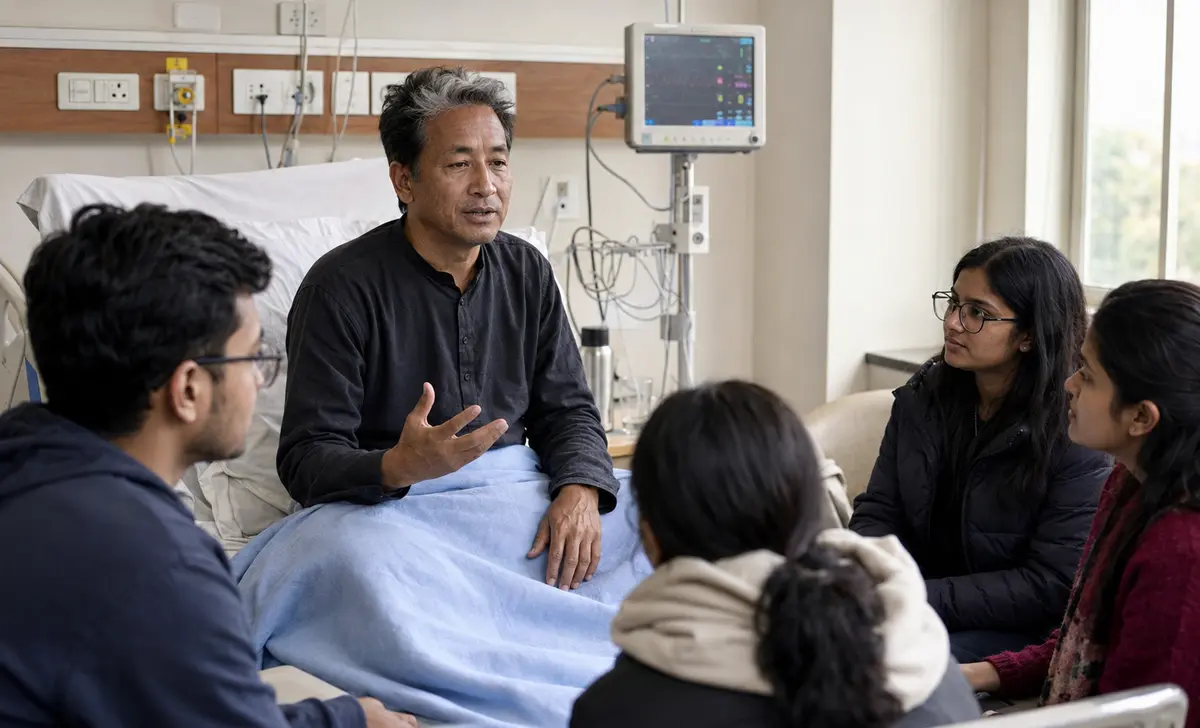
Climate activist and education reformer Sonam Wangchuk has said he is prepared to end his indefinite fast, but only after the Centre gives an unequivocal assurance that young people who participated in the NEET-UG paper leak agitation will not face punitive, retaliatory or harassing legal action.
Wangchuk's conditional offer marks a potentially important turning point in the protest that has grown from an examination controversy into a wider national debate about student rights, police action and government accountability. His statement places the immediate protection of young protesters at the centre of any settlement.
The activist has asked the government to make it clear that students and other young participants in the July 20 Chalo Sansad march will not be targeted after demonstrations end. He has also sought protection against future harassment linked to participation in what organisers describe as a peaceful movement.
Sonam Wangchuk Sets Condition to End Indefinite Fast
Wangchuk's position is not simply a request for his own safety or medical relief. He has made the treatment of younger demonstrators the deciding condition for ending a fast that has seriously affected his health.
According to the latest statement, he wants an assurance that is direct and unambiguous. A general appeal for calm or an informal message would not meet that demand. The activist is seeking a clear commitment that no legal case, questioning, surveillance, intimidation or other retaliatory measure will be used against protesters merely because they joined the agitation.
The demand follows allegations that participants faced disproportionate police action during the march in Delhi. Protest groups have accused the authorities of using force against students and other demonstrators. Police intervention came after sections of the crowd reportedly attempted to move beyond barricades towards the Parliament area.
Wangchuk has consistently praised the young participants for maintaining peace despite tension and provocation. His latest condition suggests that he sees their protection as essential to preserving confidence in democratic protest.
Why Sonam Wangchuk Began the Hunger Strike
Wangchuk joined the agitation on June 28 and began an indefinite fast in solidarity with students demanding accountability over alleged irregularities in the NEET-UG examination system. The movement has focused on the alleged paper leak, the pressure placed on aspirants and broader failures affecting competitive examinations.
One of the central political demands has been the resignation of Union Education Minister Dharmendra Pradhan. Protest leaders argue that repeated examination failures require ministerial accountability, while the government has defended its response and pointed to investigations, arrests and proposed reforms.
The fast continued for weeks as the dispute failed to produce an agreement. Wangchuk lost significant weight and became increasingly weak, prompting medical concern and court attention. He was eventually moved to hospital after doctors warned that his health was deteriorating.
Even after hospitalisation, he refused to withdraw from the protest. Earlier, he said the fast would continue until youth representatives were allowed to present their grievances to parliamentarians or elected leaders met him at the hospital.
What Happened During the Chalo Sansad Protest
The July 20 march brought thousands of supporters to Delhi as Parliament's Monsoon Session began. Demonstrators gathered to demand action over the alleged NEET-UG paper leak and accountability from the education ministry.
Heavy security and barricades were placed around sensitive areas. The situation escalated when groups attempted to advance towards Parliament, leading to the use of tear gas and police force. Several protesters were detained, and reports of injuries triggered criticism from Opposition parties and civil society figures.
The events widened the controversy beyond the original examination issue. Questions about the right to peaceful assembly, treatment of students and the proportionality of police action became part of the national discussion.
Wangchuk responded by declaring that he would not end his fast while young protesters feared punishment for participating. His current offer now gives the Centre a defined path to help bring the hunger strike to an end.
Why the No-Retaliation Assurance Matters
A no-retaliation assurance could reduce fear among students who joined the demonstrations. Young participants may otherwise worry that police complaints, notices or legal proceedings could affect their education, employment applications, travel or future government opportunities.
Wangchuk's demand also tests whether the government can separate peaceful participants from individuals accused of specific unlawful acts. Any assurance would need to be carefully worded because authorities may argue that genuine criminal conduct must still be investigated.
The activist's position appears to focus on preventing collective punishment or cases based merely on attendance at the protest. It does not necessarily require immunity for independently proven acts of violence. The challenge will be reaching language that protects peaceful protesters without appearing to override lawful investigations.
That distinction could become central to negotiations. A written commitment, transparent review of detentions and clear criteria for any legal action may provide a practical way forward.
Government Talks and the NEET Protest Crisis
The government has faced increasing pressure after Opposition leaders joined the student cause. Rahul Gandhi, Priyanka Gandhi Vadra and other INDIA bloc figures participated in protests near the Prime Minister's residence and were later detained or removed by Delhi Police.
Union representatives have indicated that the government is willing to discuss NEET-related issues in Parliament. However, disagreements remain over the resignation demand, accountability for police action and the protection of demonstrators.
Reports on Wednesday also indicated that Wangchuk claimed the Centre had agreed to consider demands connected to ministerial accountability. The exact nature of any assurance and whether it satisfies protest organisers remain subjects of political debate.
Readers can follow further developments through Nera News' latest India news coverage.
Sonam Wangchuk's Health Remains a Major Concern
The extended hunger strike has placed Wangchuk under serious physical strain. He was shifted to hospital after his condition weakened and medical professionals expressed concern about complications arising from prolonged fasting.
His willingness to consider ending the fast may offer relief to supporters who have repeatedly urged him to protect his health. However, the condition attached to that offer shows he does not want the movement to conclude at the cost of students who responded to the protest call.
Any delay in reaching an agreement could increase medical risk. The government, protest representatives and Wangchuk's family therefore face pressure to find language that protects young participants while allowing the fast to end without either side appearing to abandon its position.
What Happens Next in the Sonam Wangchuk Fast
The next step depends on whether the Centre responds with the unequivocal assurance Wangchuk has requested. A verbal statement may not be sufficient if protesters believe it leaves room for later cases or harassment.
Protest representatives may seek a written commitment, withdrawal or review of cases connected to peaceful participation, and clarity about those currently detained. The government may also ask organisers to publicly commit to ending demonstrations peacefully once an agreement is reached.
If both sides agree, Wangchuk could end the fast under medical supervision. After such a prolonged period without food, doctors would need to manage his return to nutrition carefully rather than allowing an immediate normal diet.
Sonam Wangchuk Fast FAQs
Is Sonam Wangchuk ready to end his fast?
Yes. He has said he is willing to end the indefinite fast if the Centre clearly guarantees that young NEET protesters will not face punitive or retaliatory legal action.
What assurance does Wangchuk want?
He wants an unequivocal commitment against legal harassment, punishment or retaliation targeting students and young people who participated in the agitation, particularly peaceful participants in the July 20 march.
Why is Sonam Wangchuk protesting?
He joined the youth-led movement demanding accountability over the alleged NEET-UG paper leak, examination reforms and action from the education ministry.
Where is Sonam Wangchuk now?
He has been receiving hospital care after his health deteriorated during the prolonged hunger strike.
Can the Centre End the Sonam Wangchuk Standoff?
Wangchuk has now presented the government with a specific condition rather than an open-ended demand. That creates an opportunity for negotiations, but success will depend on how clearly the Centre addresses concerns about retaliation.
The most practical resolution would protect peaceful students, allow transparent investigation of any individually proven offence and provide a credible route for the activist to end his fast safely. Until such an assurance arrives, Wangchuk's protest and the wider NEET accountability movement are likely to continue.