
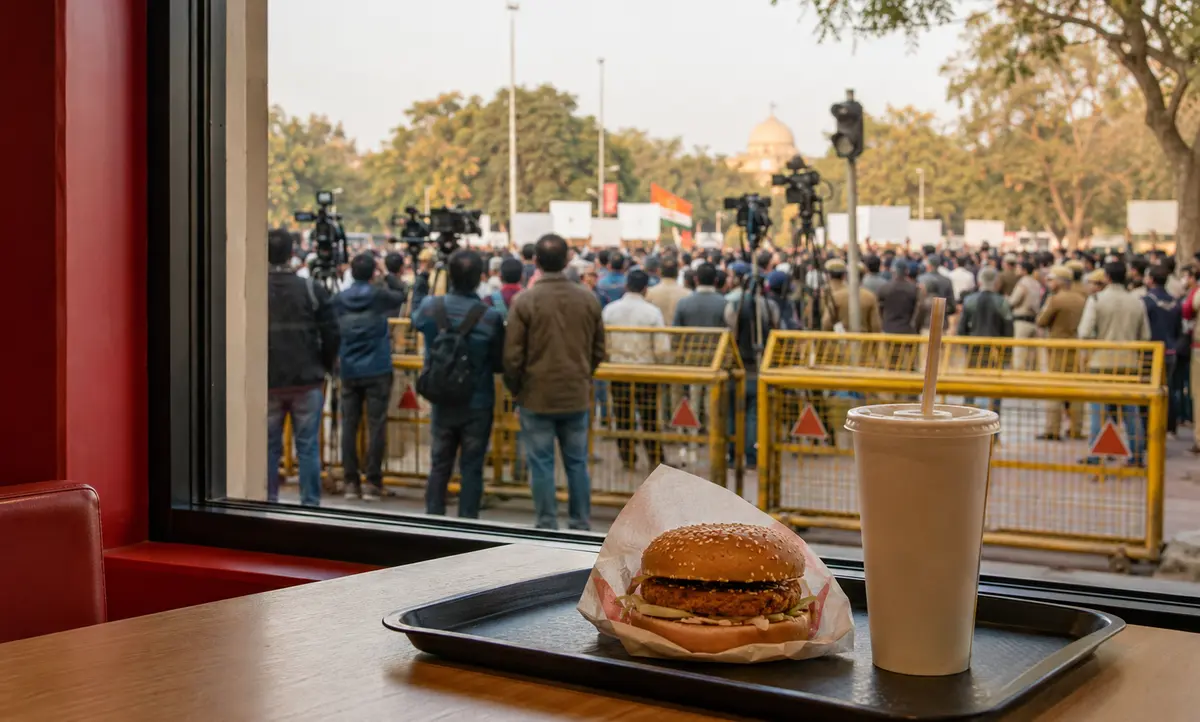
The Cockroach Janta Party has removed Vijeta Dahiya from the position of spokesperson after videos linked to the party's Parliament march triggered a sharp online backlash. The decision came after footage circulated that allegedly showed Dahiya away from the main protest area while demonstrators were facing police action in New Delhi.
The controversy grew further when Dahiya appeared in a video discussing why he had stopped for a burger. What might otherwise have been treated as a brief food break quickly became a political optics crisis. Critics questioned why an official spokesperson appeared relaxed at a restaurant while party supporters said they were dealing with barricades, detentions and force on the streets.
Why CJP Sacked Vijeta Dahiya After the Viral Video
CJP publicly distanced itself from Dahiya's conduct and said the videos did not reflect the principles of the movement. In its statement, the organisation described the actions as insensitive because they surfaced while protesters and members of its team were reportedly facing police violence.
The party said the conduct showed poor judgment and confirmed that Dahiya was being removed as spokesperson and relieved of official responsibilities. The speed of the response suggests that CJP viewed the issue as more than an argument about food. It had become a question of leadership, accountability and how representatives behave during a politically sensitive protest.
For any growing political movement, a spokesperson is not simply another supporter. That person speaks for the organisation, explains its decisions and often becomes the public face of its values. A short viral clip can therefore cause much greater damage when it involves an official representative.
What Happened During the CJP Protest
The videos emerged around the time of CJP's Sansad Chalo mobilisation in Delhi. Supporters had gathered as part of a protest linked to concerns over alleged examination irregularities and demands directed at the government. Tension increased when demonstrators attempted to move ahead and police restricted the march.
Several protesters alleged that force was used against participants. Against that background, images of a spokesperson at a fast-food outlet created a powerful contrast. Social media users were not only reacting to the burger. They were reacting to the difference between the experience shown at the protest and the calmer scene associated with Dahiya.
The timing of the restaurant footage was initially disputed online, and some reports noted that the exact sequence had not been independently established. Dahiya maintained that he had participated in the protest and left only after the march had progressed. However, the later response video added fresh momentum to the criticism.
How Vijeta Dahiya Defended the Burger Break
Dahiya said he was hungry and argued that eating during a long protest should not become a major controversy. He also referred to physical exhaustion and said people involved in the movement had gone without proper sleep while preparing for and participating in the demonstrations.
His explanation focused on a basic point: protesters and organisers still need food and rest. That argument found some support online, where users said a single restaurant visit did not prove a lack of commitment. Others believed the tone of the response was the larger problem.
Rather than calming the situation, the video was interpreted by critics as dismissive of those asking why he was not visibly present during the most difficult phase of the march. In political communication, tone often matters as much as the explanation itself. A defensive or mocking response can turn a manageable controversy into a larger debate about responsibility.
Does the Vijeta Dahiya Removal Reveal a Rift in CJP?
The removal has encouraged speculation about a possible rift inside the Cockroach Janta Party, but there is no clear evidence yet of a wider organisational split. What is visible is a disagreement between the standards expected by the party and the conduct associated with one of its spokespersons.
CJP's statement was firm and left little room for ambiguity. By removing Dahiya quickly, the organisation attempted to show that official position holders would be held accountable when their actions were seen as damaging to the movement.
At the same time, the episode may expose the pressure inside a young political organisation that has grown rapidly through social media. Movements built online can attract attention quickly, but they must also create internal discipline, clear responsibilities and a common communication strategy. Without those systems, individual videos can easily overshadow the original cause.
Readers following this developing political story can find continuing updates in Nera News India coverage.
Why the CJP Burger Row Became a Political Crisis
The incident demonstrates how modern politics is shaped by short videos and immediate public judgment. A spokesperson may spend weeks working behind the scenes, but a few seconds of footage can become the image by which the public evaluates that work.
The burger became a symbol because it appeared to represent comfort at a time when supporters claimed they were facing hardship. Whether that interpretation gives the complete story or not, it became the dominant public narrative. CJP's action shows that the party believed allowing the controversy to continue would damage its credibility more than removing the spokesperson.
Political accountability is also central to the debate. Supporters expect leaders and official representatives to remain visible during moments of risk. When the representative's location or conduct appears inconsistent with that expectation, the resulting anger can be intense.
Vijeta Dahiya and CJP FAQs
Why did CJP remove Vijeta Dahiya?
CJP removed Vijeta Dahiya as spokesperson after viral videos and his response to the criticism were described by the party as insensitive and inconsistent with the movement's values.
Was Vijeta Dahiya absent from the entire protest?
Dahiya said he had participated in the protest and left after the march. Viral clips raised questions about his location during the agitation, but the complete timeline of every video has not been independently established.
Did CJP confirm a wider internal rift?
No wider split has been officially confirmed. The available information shows a disciplinary decision involving one spokesperson rather than evidence that the organisation itself has divided into rival groups.
What the CJP Decision Means for the Party
The immediate challenge for CJP is to move public attention back to the issues behind its protest. Removing Dahiya may help the party demonstrate discipline, but the controversy will continue to shape discussion until its leaders clearly explain responsibilities during the march and the standards expected from official representatives.
The practical lesson is clear: political movements cannot separate street action from online communication. Every spokesperson must understand that personal videos, jokes and casual responses can be treated as official signals during a crisis. CJP's next steps will show whether this was a single disciplinary episode or the beginning of a broader internal restructuring.