
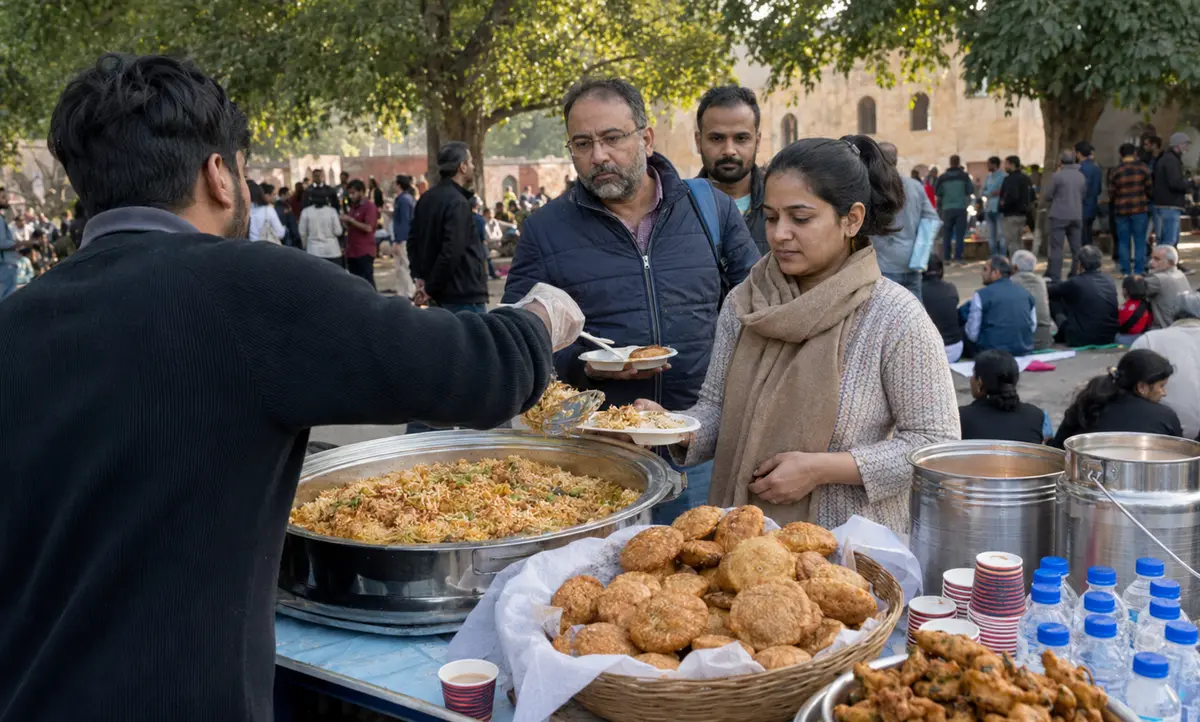
Mohammad Junaid, a volunteer who supplied food and water during the CJP-led Jantar Mantar agitation, has alleged that police personnel detained and questioned him about the money used to feed protesters. His emotional media interviews have now created a second controversy, with questions being raised about whether Cockroach Janta Party leaders continued supporting him after the protest ended.
Junaid said he helped provide tea, water, breakfast and meals to people at the protest site for more than a month. Social media accounts sympathetic to him claim the service continued for about 37 days and included food several times a day. Earlier news reports also documented his presence as a volunteer serving refreshments at Jantar Mantar.
In interviews circulating online, Junaid claimed that police questioned how a person running a mobile phone repair shop could arrange food on that scale. He said volunteers received support through public donations and food deliveries. Police have said they are examining his allegations.
What Did Junaid Say About His Alleged Detention?
Junaid alleged that men identifying themselves as police personnel stopped him after he returned from a hospital visit. According to his account, he was questioned, kept blindfolded and asked about the source of funds used to distribute meals at the protest.
He further claimed that he was taken away from Delhi and left in Mussoorie the following morning. He said he arranged a cab and returned to the capital. These claims are serious, but they remain allegations made by Junaid. Authorities had not publicly confirmed his version in full at the time of publication.
Earlier, the CJP had accused Uttar Pradesh Police of targeting Junaid and his family because of his role in supporting the protest. The party said its legal team was in contact with him and promised to challenge any unlawful action.
Police officials in Meerut denied detaining members of his family and said checks with local police stations did not confirm such action. Reports also indicated that the matter could involve personnel from another district, leaving several questions unresolved.
How Did Junaid Support the Jantar Mantar Protest?
Junaid became visible during the agitation because he helped distribute food and drinking water to demonstrators. Early coverage of the protest described him serving cold water, tea, breakfast and pakoras. Later social media posts said the arrangement expanded and continued through much of the protest.
Claims that he personally served four meals every day for exactly 37 days, or that specific CJP leaders regularly ate biryani, kachoris and pakoras prepared by him, have circulated widely online. Nera News could not independently verify every menu item, frequency or individual beneficiary.
The broader fact that Junaid worked as a food and water volunteer has been reported by several outlets and acknowledged by the CJP itself. The unanswered question concerns how much money was collected, who contributed it and how the supplies were organised.
That question does not by itself prove wrongdoing. Large protests often rely on volunteers, small public contributions and donated food. Clear accounts can still protect volunteers and organisers from suspicion while helping authorities distinguish community support from undisclosed political funding.
Did CJP Leaders Stop Answering Junaid's Calls?
In a recent interview, Junaid reportedly said he contacted a lawyer associated with the movement but was unable to reach senior CJP leaders. He appeared emotional when asked whether the party was standing with him.
Social media users interpreted the interview as evidence that the party had abandoned a volunteer after benefiting from his work. That interpretation has spread quickly, but the public material reviewed does not establish why calls were unanswered, how many leaders were contacted or whether legal assistance was provided through another channel.
There are also claims that Junaid was not invited to a CJP celebration held after the protest. No publicly available guest list or official party explanation was identified. The claim should therefore be treated as unconfirmed unless Junaid or the party provides specific evidence.
The CJP had previously stated that its team was in touch with Junaid and would not allow him or his family to be victimised. His latest interview now puts pressure on the organisation to explain whether that support continued and what legal help it offered.
Why Junaid's Interview Has Triggered a Political Debate
The controversy reaches beyond one volunteer. Political movements depend heavily on people who arrange water, food, transport, medical help and communication. These workers rarely receive the attention given to leaders, but they carry much of the daily burden at a protest site.
When a volunteer later alleges detention or intimidation, organisers have a responsibility to respond clearly. Silence can create an impression that grassroots supporters matter only while cameras are focused on the protest.
The CJP can address the issue by publishing a factual timeline of its contact with Junaid, identifying the lawyer assigned to him and explaining whether the party offered legal or financial support. Junaid can strengthen his account by sharing dates, names, donation records and any evidence connected to his alleged detention.
Readers can follow continuing developments through the latest India news section.
Where Did the Money for Protest Meals Come From?
This is the central factual question raised during the alleged questioning. Junaid has said that supporters contributed food, water and donations. Such community support is common during public demonstrations, especially when volunteers post requirements online and local residents deliver supplies.
However, a month-long food operation can involve substantial quantities of grain, vegetables, cooking fuel, disposable plates, transport and labour. A simple public record of incoming donations and daily expenses would answer many questions without exposing small donors unnecessarily.
If the effort was entirely donation-based, receipts, delivery messages and volunteer statements could support that account. If the CJP financed part of the operation, the party should disclose the arrangement. Transparency would protect both Junaid and the movement from speculation.
Questions about funding must be investigated lawfully. They do not justify detention, threats or abandoning a person in another city if Junaid's account is accurate. At the same time, allegations against police require evidence and an official inquiry.
What Have Police Said About Junaid's Claims?
Reports said police were looking into Junaid's allegation that he was detained, blindfolded, questioned and left in Mussoorie. There was no detailed public response confirming the officers involved or the legal basis for the alleged action.
Meerut Police separately denied conducting action against his family. Officials said local station heads had been contacted and no family detention by Meerut Police had been established.
A proper inquiry should examine mobile location records, CCTV footage, hospital departure details, toll records and the cab journey Junaid says he used to return from Mussoorie. These records could confirm or challenge important parts of his account.
The investigation should also clarify whether any notice, complaint or case existed against him and whether he was formally arrested. The difference between questioning, informal custody and lawful arrest is important.
What Should the CJP Clarify Now?
The party should answer whether Junaid was an official volunteer, an independent supporter or a vendor working with the protest. It should also clarify whether it collected money for food, maintained expense records and assigned legal representation after the police-related allegations emerged.
CJP leaders should respond directly to Junaid's statement that his calls went unanswered. A brief public clarification can prevent rumours from replacing facts.
The party should also explain its earlier statement that its team was in contact with him. If support was offered, it can state what action was taken without revealing confidential legal information.
Follow related updates from Delhi and national politics through Nera News coverage of political developments.
Junaid Interview FAQs
Who is Mohammad Junaid?
Mohammad Junaid is a volunteer who became known for distributing food, tea and water to demonstrators during the CJP-linked Jantar Mantar protest. He reportedly operates a mobile phone repair business.
Was Junaid detained by police?
Junaid alleges that police personnel detained, questioned and blindfolded him before leaving him in Mussoorie. Police were reported to be examining the allegation. His complete account had not been independently confirmed at publication time.
Did Junaid feed protesters for 37 days?
Social media posts and interviews describe him serving protesters for around 34 to 37 days. News coverage confirms his role in providing food and water, but the exact duration and number of daily meals require independent documentation.
Did CJP abandon Junaid?
Junaid reportedly said some party leaders were not answering his calls, and he became emotional when asked about their support. The CJP had earlier said its legal team was in contact with him. The party needs to clarify what support continued afterward.
Was Junaid excluded from a CJP celebration?
The allegation is circulating online, but no verified guest list or official explanation has been published. It remains an unconfirmed claim.
Junaid's Account Needs Answers From Both CJP and Police
Junaid's interviews have turned attention toward the volunteers who sustained the Jantar Mantar protest away from the main stage. His work distributing food and water is documented, while the scale, funding and exact duration still need transparent records.
His detention claim also requires an impartial investigation. The police should provide a factual response, and the CJP should explain whether it continued supporting the volunteer it had publicly defended.
Junaid has the right to speak to the media and present his account. Responsible coverage must also separate his claims from facts already verified. Documents, call records, donation accounts and official responses can now establish what happened and who stood by him after the protest ended.