
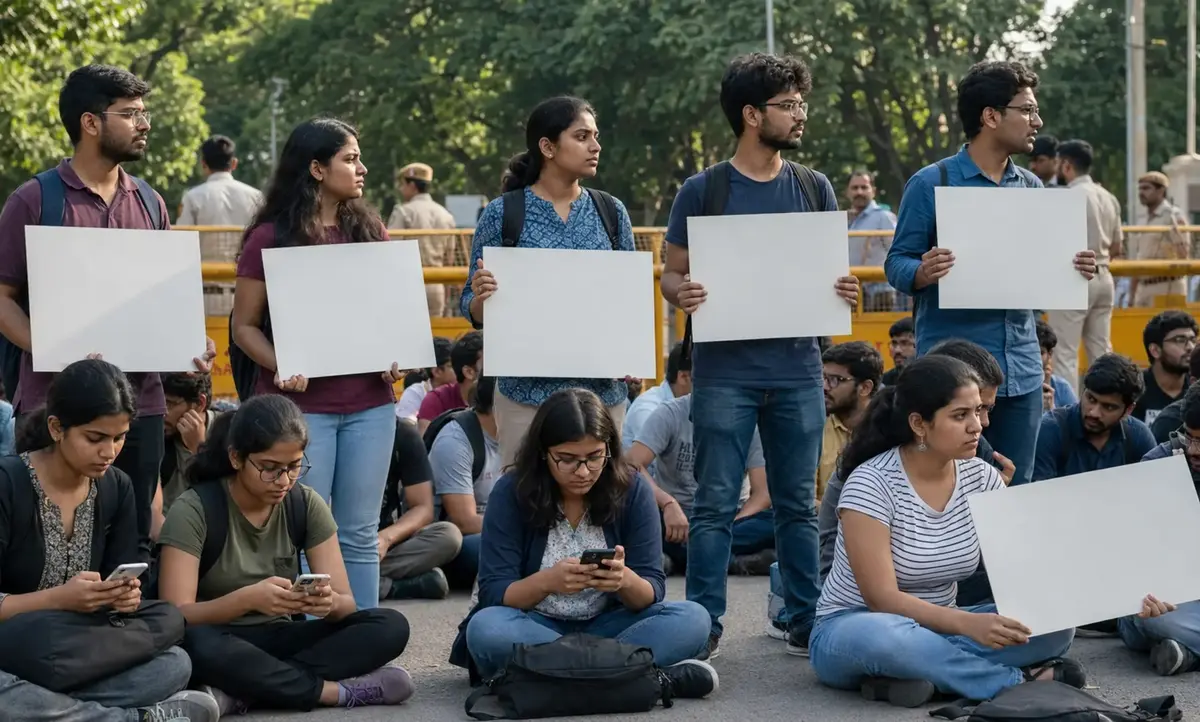
Cockroach Janta Party spokesperson Ashutosh Ranka has warned that the organisation may return to protest if police cases, arrests and alleged surveillance involving students continue. He described the reported action against protesters as a complete breach of an earlier agreement that no punitive police action would follow the agitation.
Ranka addressed Union ministers JP Nadda and Jitendra Singh in a public statement and sought immediate intervention. He alleged that students and protesters in several states were being arrested, detained, summoned or monitored despite assurances given when the CJP ended its protest.
“We will be forced to sit on protest again,” Ranka warned while demanding the withdrawal of cases and the release of detained protesters. The statement has reopened questions about whether the agreement that ended the agitation is being implemented consistently across India.
Why Has CJP Threatened a Fresh Protest?
The CJP called off its agitation after the government accepted key demands linked to examination reforms and accountability over paper leaks. Reports at the time said the settlement included an assurance that cases against peaceful protesters would be withdrawn and that participants would not face retaliatory action.
Ranka now alleges that this assurance is being violated. The party has flagged police action involving protesters in Bihar, West Bengal and Assam. It says students have faced FIRs, detention and questioning after participating in demonstrations connected to the movement.
The CJP spokesperson has asked the government to share the written agreement concerning legal cases and provide a clear timeline for its implementation. His warning suggests that the movement considers protection of protesters a central part of the settlement, not a secondary demand.
Readers can follow continuing developments through the latest India news section.
What Did Ashutosh Ranka Allege?
Ranka claimed that students who took part in the agitation were being arrested, detained and placed under surveillance. He said such action represented a “complete breach” of the understanding reached with the government.
The CJP has demanded the immediate release of detained individuals and the withdrawal of FIRs registered against protesters. It has also sought protection for students who fear further action because of their participation in demonstrations or online support for the movement.
These claims require case-by-case verification. Police action can involve different state forces, separate complaints and varying allegations. An assurance by the Union government may also require coordination with state governments and local police authorities before cases can be reviewed or withdrawn.
The CJP argues that administrative complexity cannot excuse continued action against students after a political settlement. It wants the Centre to communicate the agreement formally to the relevant authorities and ensure that the promised relief reaches every affected protester.
Which States Has CJP Mentioned?
Reports said the CJP raised concerns about arrests, detentions and FIRs involving protesters in Assam, Bihar and West Bengal. The party has asked the Centre to intervene and ensure that students are not punished for participating in peaceful demonstrations.
In Bihar and West Bengal, the organisation has specifically sought the withdrawal of FIRs and the release of detained participants. Details of every case, including the allegations recorded by police and the legal status of those detained, were not immediately available in one consolidated public record.
This makes a transparent official list important. The government and the CJP can jointly identify the cases connected to the protest, distinguish peaceful participation from any separately alleged offence and publish the action taken on each matter.
What Are the Surveillance Allegations?
Students in Mumbai previously alleged that police asked them to share live locations, summoned them to police stations and held them for several hours. Some also expressed concern that their phones may have been monitored after being taken during questioning.
Those allegations have intensified fears that young protesters could face continued scrutiny even after the agitation ended. Surveillance claims are difficult to prove without technical examination, written orders or device records. They should be investigated independently rather than accepted or dismissed without evidence.
Police may lawfully investigate specific offences, but monitoring must follow legal procedure and remain proportionate. Participation in a peaceful protest does not automatically establish criminal conduct.
The authorities should clarify whether students were asked to share locations, why devices were taken and whether any monitoring authorisation existed. A clear response would reduce speculation and protect both students and investigators.
What Was Agreed When the CJP Protest Ended?
The CJP ended its protest after talks with the government produced assurances on major demands. Reports said the settlement covered examination reform, action linked to the paper leak controversy and relief from legal cases for protesters.
The movement had gathered momentum after weeks of demonstrations at Jantar Mantar and a march towards Parliament. Police action, detentions, transport restrictions and allegations of excessive force became major parts of the dispute.
When the protest concluded, CJP leaders presented the outcome as a victory for students. The promise of no punitive action was important because many participants feared that police cases could affect their education, employment and future verification processes.
Ranka’s latest statement indicates that the party believes this part of the agreement has not been fully honoured. The government has not yet issued a detailed public response addressing every allegation raised in his warning.
Can FIRs Against Protesters Be Withdrawn Immediately?
Withdrawal of an FIR is not always a single administrative step. The process depends on the alleged offence, the stage of investigation, the state where the case was filed and whether a court must approve withdrawal from prosecution.
The government can direct a review, ask prosecutors to examine cases and support withdrawal where the law permits. Courts may still assess whether ending a case serves justice, especially when serious offences are alleged.
Cases based only on peaceful assembly or minor protest-related violations can often be reviewed faster. Allegations involving violence, property damage or attacks on public servants may require separate evidence and judicial scrutiny.
A time-bound review panel could help. It should publish the number of protest-related cases, their present status and the reason for retaining or withdrawing each one.
Will the CJP Return to Jantar Mantar?
Ranka’s warning keeps that possibility open, but the party has not announced a confirmed date or location for a renewed sit-in. Its immediate demand is compliance with the earlier assurance.
A fresh protest may depend on how quickly the Centre responds, whether detained students are released and whether FIRs begin to be reviewed. The CJP may also seek another formal meeting before mobilising supporters again.
Returning to protest would test the relationship between the youth-led movement and the government soon after both sides announced an agreement. It could also bring renewed security restrictions and political pressure in Delhi.
Follow related developments through Nera News coverage of Indian politics.
Why the Government’s Response Matters
The dispute now concerns trust. If a settlement included protection from punitive action, the government must explain how that promise applies across different states and police jurisdictions.
A written clarification can state which cases qualify for review, who will coordinate with state authorities and when affected students can expect decisions. It should also create a channel for protesters to report action that they believe violates the agreement.
The CJP must also provide precise details. Names, FIR numbers, police stations, dates of detention and copies of notices would allow independent verification and prevent unrelated cases from being mixed with protest-linked action.
Both sides can reduce tension by replacing broad accusations with a public case list and deadlines. Students should not have to depend on social media posts to know whether the agreement protects them.
CJP Fresh Protest Warning FAQs
What did Ashutosh Ranka say?
Ashutosh Ranka alleged that students and protesters were facing arrests, detention, FIRs and surveillance despite an earlier assurance against police action. He warned that the CJP could sit on protest again.
Has the CJP announced a new protest date?
No confirmed date or venue has been announced. The statement is a warning that protests may resume if the alleged action against students continues.
Which states are involved in the CJP allegation?
The CJP has raised concerns about cases and detentions involving protesters in Assam, Bihar and West Bengal. Separate surveillance concerns were also reported by students in Mumbai.
Did the government promise to withdraw protest cases?
Reports about the settlement said legal relief and protection from punitive action formed part of the assurances given when the protest ended. The CJP is seeking the written agreement and a clear implementation timeline.
Can the Centre order every state FIR to be withdrawn?
The Centre can coordinate and recommend review, but police and prosecution procedures differ by state. Some withdrawals may also require court approval.
Fresh CJP Protest Depends on Action Over Student Cases
The CJP’s latest warning shows that the political settlement has entered a difficult implementation stage. Ending a protest is only the first step. Written assurances must translate into action for students facing cases, detention or alleged monitoring.
The government should publish a clear response and timeline. The CJP should release verifiable details of every affected student. Until that happens, the dispute over arrests and surveillance could push the movement back to the streets.