
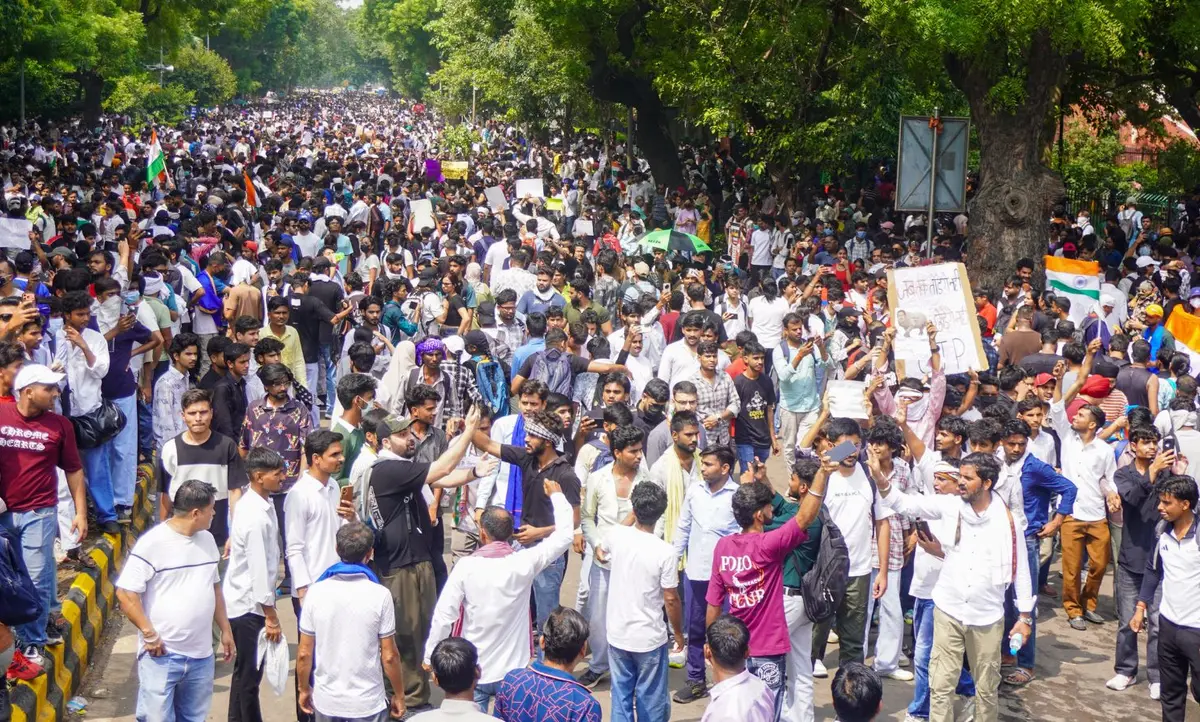
The Cockroach Janta Party has warned that nationwide student protests could return after claiming that a Supreme Court interim order does not match the assurance given by the Centre on withdrawing cases filed against demonstrators. The organisation described the situation as uninformed and unacceptable, while asking the government to honour the terms that led it to end its agitation.
The dispute centres on the difference between protection from immediate police action and the complete withdrawal of First Information Reports. The Supreme Court has directed states not to take coercive action against protected protesters for now. It has also ordered the release of detained students without criminal antecedents. However, police investigations and existing FIRs have not been cancelled by that interim protection.
CJP says the Centre had assured its representatives during talks on July 25 that FIRs against protesters would be withdrawn and that participants would not face direct or indirect punitive action. The organisation argues that the court order leaves the cases alive and therefore falls short of the political commitment on which it relied when ending the protest.
Why CJP Called the Supreme Court Order Unacceptable
CJP spokesperson Saurav Das said the organisation welcomes judicial protection for young protesters but objects to any condition that allows the cases to continue. According to the group, withdrawal of the FIRs was one of its principal demands and was not meant to be replaced by a temporary pause on arrests or other coercive measures.
The party also questioned why the Centre's lawyers did not place the July 25 understanding before the Supreme Court. It asked the Union government and BJP or NDA-led state governments to inform the court about the assurances given during negotiations so that the complete background can be considered in later hearings.
CJP maintains that it suspended its agitation in good faith. Its representatives say a government assurance must be implemented independently of the relief ordered by the court. In their view, the judicial direction can offer additional protection, but it cannot replace the promised withdrawal of all protest-related cases.
What the Supreme Court Ordered for Student Protesters
A three-judge bench led by Chief Justice of India Surya Kant directed that no coercive action should be taken against student protesters in connection with the FIRs until further orders. The bench also ordered states to release detained students without a previous criminal record, with specific protection for minors.
The court did not extend the same automatic protection to people with criminal antecedents. This qualification became one of the main points of concern for CJP because the organisation had demanded protection for everyone booked over participation in the agitation.
The bench was hearing petitions alleging excessive police force during demonstrations in Delhi and several states. The claims include the use of lathis, tear gas, pellet guns and other crowd-control measures. The court observed that the allegations appeared serious enough to consider an independent and impartial inquiry.
At the same time, the proposed inquiry is expected to examine allegations against both police personnel and protesters. The Centre has argued that criminal or anti-social elements may have entered the demonstrations and attacked officers. The court indicated that the evidence must be examined fairly rather than accepting either version without scrutiny.
FIR Withdrawal and No Coercive Action Are Different
The legal distinction is central to the latest confrontation. An order preventing coercive action normally blocks immediate steps such as arrest or detention while the protection remains in force. It does not automatically erase an FIR, end an investigation or close a criminal proceeding.
Withdrawal of a case requires a separate legal process. Depending on the stage and nature of the matter, state authorities may need to issue directions, complete procedural steps and seek permission from the appropriate court. That is why CJP is demanding written government action instead of relying only on temporary judicial protection.
The Supreme Court order therefore gives significant immediate relief to many protesters, but it does not deliver the complete outcome CJP says the government promised. The organisation fears that cases left open could create future legal pressure even if arrests are currently stopped.
CJP Warns Nationwide Protest Could Return
CJP founder Abhijeet Dipke warned that the organisation would respond with another massive peaceful protest if students continued to face police harassment. Saurav Das also said the group would have no option but to resume its nationwide movement if the July 25 guarantees were not honoured.
The warning follows earlier allegations that students were being detained, questioned and monitored even after the agitation ended. Nera News previously reported CJP's warning over alleged arrests and surveillance, which showed that legal protection had become the main unresolved issue after the protest was withdrawn.
The group says any renewed mobilisation would remain peaceful. Its language, however, signals that the truce with the Centre is fragile. The organisation believes the government must show visible progress on FIR withdrawal before trust can be restored.
Why CJP Ended Its Earlier Agitation
CJP called off its 49-day agitation after talks with Union ministers and the resignation of Dharmendra Pradhan as education minister. The movement had focused on the alleged NEET-UG 2026 paper leak, examination reforms, compensation for affected families and legal protection for protesters.
The resignation was treated as a major victory, but it was only one part of the agreement described by CJP. The organisation also expected cases filed by the Centre and NDA-led states to be withdrawn. Our earlier report on why CJP ended the Jantar Mantar protest explained that the decision depended on the remaining assurances being carried out within agreed timelines.
Bihar and Assam have reportedly started steps connected with closing protest cases and releasing detainees. CJP says it also received assurances about protection in Rajasthan. The position in every state is not identical, which is why the party continues to seek a clear, nationwide written commitment.
Supreme Court Orders Preservation of Protest Evidence
The court has directed authorities to preserve CCTV recordings, drone footage, body-camera videos, wireless communications and police control room records connected with the protests. This material could become crucial if an independent inquiry is ordered.
Authorities were also told to protect the personal data of protesters and prevent its release into the public domain. The order addresses concerns about surveillance and possible online exposure while ensuring that relevant evidence remains available for judicial examination.
Senior state officials and legal representatives are expected to participate in the next stage of the hearing. The case is scheduled to return before the court on August 3, when the bench may receive responses from the Centre and the states involved.
What Happens Next in the CJP FIR Dispute
The immediate question is whether the Centre and state governments will issue formal directions to withdraw the remaining FIRs. CJP wants the promised political settlement implemented before the court proceeds further with its examination of police conduct and protest violence.
The government may also need to explain how its July 25 discussions with CJP fit with the cases being heard by the Supreme Court. A clear written statement could reduce confusion about which protesters are protected, which cases will be closed and how allegations involving violence will be handled.
For students, the interim order provides important short-term protection. Those without criminal antecedents should not face coercive action under the current direction, and eligible detainees must be released. The continuing FIRs, however, remain the point that CJP says could bring protesters back to the streets.
The confrontation has therefore shifted from the original demand for Dharmendra Pradhan's resignation to the terms of legal safety after the agitation. Whether the protest returns will depend on how quickly the Centre and the states act, and whether their next steps satisfy both the court's directions and the assurances CJP says it received.
CJP Supreme Court Order FAQs
Why is CJP unhappy with the Supreme Court order?
CJP says the order prevents immediate coercive action but does not withdraw the FIRs. The organisation claims the Centre had promised complete withdrawal of protest-related cases.
Did the Supreme Court protect the protesters?
Yes. The court ordered states not to take coercive action against protected student protesters for now and directed the release of detained students without criminal antecedents. The protection is subject to the conditions stated by the bench.
Will CJP restart its protest?
CJP has warned that it may resume a nationwide peaceful protest if the government fails to withdraw FIRs and stop alleged harassment of students. No fresh protest date has been officially announced.
When is the next Supreme Court hearing?
The next hearing is scheduled for August 3, 2026. The Centre and relevant states are expected to respond to the issues raised before the bench.
What Students Should Know About the CJP Warning
The Supreme Court order offers immediate protection, but it does not automatically close every case. Students affected by an FIR should rely on qualified legal advice and official court or government documents rather than unverified social media claims.
CJP has made FIR withdrawal the test of whether the July 25 settlement will survive. The Centre's next written response and the August 3 hearing will decide whether the disagreement moves toward resolution or triggers another round of nationwide mobilisation. Follow latest India news for verified updates.